

Table of Contents
- Understanding Specialized Training and Early Specialization
- Age Guidelines: When Specialization Makes Sense
- Signs Your Child Needs Extra Football Training
- Building a Youth Football Training Schedule
- Position-Specific Football Training: When to Begin
- Managing Training Load and Recovery
- Conclusion: Making the Right Decision for Your Athlete
- Frequently Asked Questions
Last Updated: October 18, 2026
Understanding Specialized Training and Early Specialization
Specialized training means focusing deeply on one sport rather than playing multiple sports across seasons.
When to start specialized training isn’t about age alone, it’s about readiness. Some ten-year-olds are ready for focused skill development; others at fourteen still benefit from multiple sports.
Early specialization has trade-offs. Committing to one sport early builds deep expertise but concentrates training load on the same muscles and joints year-round.
Many coaches and parents assume early specialized training guarantees success. The data says otherwise, what matters more is matching training to the athlete’s physical maturity, motivation, and long-term goals.
The best time to start specialized training isn’t when your child is the oldest or most talented on the team, it’s when they ask for it and show consistent motivation to improve specific skills.
Age Guidelines: When Specialization Makes Sense
Most youth athletes can begin focused skill development between ages 12 and 14. Before that, movement fundamentals matter more than sport-specific drills. But age alone is a blunt instrument, combine age bands with a readiness checklist and sport-specific timelines.
Age bands as a starting point
Ages 7-11 are ideal for learning basic motor skills, running, jumping, throwing, and catching. Playing multiple sports builds these foundations faster than specializing in one.
Ages 12-14 mark a shift. Physical maturity begins varying widely between athletes. Some are ready for advanced footwork and tactical training. Others need more time developing basic strength and coordination.
High school athletes (14+) can handle serious specialized training. By this age, most have the physical maturity and mental focus for structured coaching, and training volume can increase safely.
Starting year-round specialized training before age 12 significantly increases injury risk. Young athletes’ growth plates are still developing, and repetitive stress from one sport can cause lasting damage.
A practical readiness checklist beyond age
Before committing to specialized training, assess these five areas. A simple yes-or-no tally helps families decide whether to start, wait, or transition gradually.
- Motivation: Does the athlete ask to practice or watch film without prompting? Do they set their own goals for improvement?
- Physical maturity: Has the athlete begun their growth spurt? Can they perform bodyweight squats, push-ups, and single-leg balances with good form?
- Training age: Have they played the sport for at least two seasons and learned basic rules and positions?
- Recovery capacity: Can they handle two to three practices per week without persistent soreness or fatigue?
- School and life balance: Can they add training without cutting sleep, homework time, or family obligations?
If most answers are yes, the athlete is likely ready for focused skill work. If several are no, continue multi-sport play and revisit in three to six months.
Sport-by-sport timelines
Different sports reward specialization at different ages because skill demands and injury risks vary.
- Football (skill positions): Quarterback and receiver mechanics benefit from focused coaching around ages 13-14, once basic footwork and throwing motions are stable. Linemen should wait until 13-14 for serious strength work.
- Soccer: Technical ball mastery is highly trainable at ages 8-12, but tactical specialization makes more sense at 12-14.
- Swimming and gymnastics: These sports often see early specialization because peak performance windows arrive sooner, but volume must be managed carefully to avoid overuse.
- Basketball and baseball: Skill development can begin around 10-12, with position-specific focus at 13-14.
- Track and field: Event-specific training typically starts at 13-15, after general athletic development.
Use these timelines as guides, not rules. The readiness checklist above should always override a generic age recommendation.
Signs Your Child Needs Extra Football Training
Not every young football player needs specialized coaching. Some develop well through high school programs alone. Others plateau without focused attention on position-specific skills.
Your child may benefit from extra training if they:
- Show consistent interest in improving specific skills (throwing accuracy, footwork, reading defenses)
- Play in competitive leagues where peers are receiving outside coaching
- Want to play college football or pursue the sport seriously
- Struggle with fundamental mechanics despite practicing with their team
- Have the physical maturity to handle increased training volume safely
Watch for motivation. A child who asks about improving their throwing or footwork is ready. A child pushed by parents alone usually isn’t.
Also notice frustration during games. Mental preparation matters as much as physical drills, if your child freezes under pressure or second-guesses themselves, classroom-style coaching on game scenarios can build confidence.
The strongest sign your child is ready for specialized training is intrinsic motivation, they want to improve, not because you want them to, but because they do.
Building a Youth Football Training Schedule
A smart training schedule balances specialized work with recovery and variety. Progress gradually and track workload with simple, measurable metrics.
A phased transition plan
Moving from multi-sport play to focused football training should happen in stages, not all at once. A common pattern is a three-phase transition over 8-12 weeks.
Phase 1: Maintain and observe (weeks 1-4). Keep the athlete in their current multi-sport schedule. Add one 30-minute skill session per week focused on fundamentals like footwork or throwing mechanics.
Phase 2: Build and adjust (weeks 5-8). If the athlete handles Phase 1 well, increase to two 45-minute skill sessions per week.
Phase 3: Focus and monitor (weeks 9-12). Move to two to three specialized sessions per week, plus team practice. Keep at least one complete rest day.
This phased approach lets families test commitment before stepping away from other sports.
Measurable workload and recovery guidance
Young athletes often get injured not because one workout is too hard, but because total load is too much. Track these metrics weekly in a notebook or spreadsheet:
- Total training hours: Sum all structured football activity, including team practice, specialized sessions, strength work, and games. For middle school athletes, aim for no more than 10-12 hours per week. High school athletes can handle 15-18 hours during in-season weeks.
- Rest days: Count complete days off from all sports. Target at least 1-2 per week, and at least one full week away from football every 8-10 weeks.
- Pain score: Ask the athlete to rate soreness or pain from 1 (none) to 5 (severe) each morning. A score of 3 or higher for more than two days in a row is a signal to reduce load.
- Fatigue and sleep: Note whether the athlete struggles to get out of bed, feels tired during warm-ups, or sleeps less than 8 hours per night. These are early warning signs.
- Motivation rating: Have the athlete rate their enthusiasm for training from 1 to 5 each week. A drop of two points or more from their baseline suggests burnout risk.
Review these metrics every two weeks. If pain scores rise, rest days fall below one per week, or motivation drops, scale back training volume by 20-30% for two weeks.
Weekly schedule examples
For middle school athletes (ages 12-14), a sample week might include:
- 2 specialized skill sessions (45 minutes each)
- 1 strength and conditioning session (30 minutes, bodyweight and agility)
- 2 team practices (60-90 minutes each)
- 2 complete rest days
- Total structured hours: about 6-8
For high school athletes, a sample in-season week:
Quarterback Registration (Required) →
- 3 specialized skill sessions (60 minutes each)
- 2 strength sessions (45 minutes each)
- 3 team practices (90 minutes each)
- 1 game
- 1 complete rest day
- Total structured hours: about 14-16
Adjust these templates based on recovery metrics and school demands.
If your child complains of persistent pain, shows signs of burnout, or loses interest in the sport, training load is likely too high. Scale back immediately.
When to pause or reverse specialization
Specialization isn’t always a one-way street. Watch for these warning signs:
- Persistent pain that lasts more than two weeks or worsens despite rest days. Next step: see a sports medicine professional and cut training volume by half until cleared.
- Burnout signaled by declining motivation, irritability, or dread before practice. Next step: take a two-week break from football and return with a reduced schedule.
- Stalled progress despite consistent training for three months. Next step: reassess technique, recovery, and whether the athlete needs a different coaching approach.
- Recurring injuries to the same area. Next step: replace two specialized sessions with cross-training activities like swimming or cycling for four weeks.
Reversing specialization temporarily isn’t failure. Many athletes benefit from returning to multi-sport play for a season to rebuild general athleticism and enthusiasm.
The goal isn’t to maximize training volume. It’s to match training to your athlete’s capacity and goals, and to adjust based on measurable recovery signals.
Position-Specific Football Training: When to Begin
Different positions develop at different paces. Quarterback training requires more advanced cognitive skills than other positions.
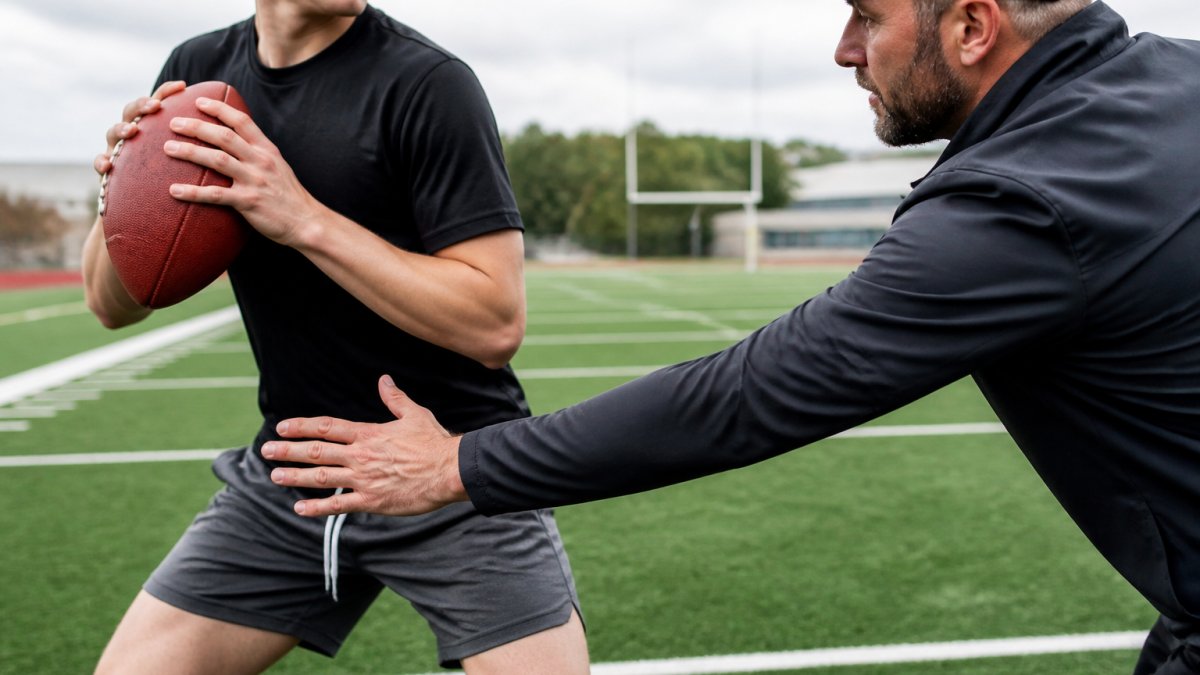
Quarterbacks benefit from specialized training starting around age 13-14. Before that, footwork and basic mechanics can improve through team practice.
Wide receivers can start position-specific work earlier, around age 11-12. Route running and catching mechanics are less cognitively complex than quarterback play.
Linemen develop differently, strength matters more than finesse early on.
The mistake many programs make is treating all positions the same. At QB Factory, we tailor drills to each position because the demands are completely different.
Start with fundamentals regardless of position. Proper stance, footwork, and hand placement matter for everyone. Once those are solid, add position-specific complexity.
Managing Training Load and Recovery
Training load is the total stress on your athlete’s body, team practice, specialized sessions, strength work, and games.
Young athletes often get injured not because one workout is too hard, but because the total load is too much.
Track these factors:
- Total hours per week in structured football activity
- Intensity of each session (easy drill work vs. high-intensity competition)
- Days of complete rest per week
- Time away from football per year
Most experts recommend young athletes take at least 1-2 complete days off per week from all sports, no football, strength training, or conditioning.
Recovery matters as much as training.
Watch for overuse warning signs: pain that worsens during the season, pain that doesn’t improve with rest days, or recurring injuries to the same area.
The goal isn’t to maximize training volume.
Conclusion: Making the Right Decision for Your Athlete
When to start specialized training depends on three things: your child’s physical maturity, genuine interest, and long-term goals.
If your child shows real motivation to improve specific skills and has the physical maturity for focused training, specialized coaching makes sense.
The right time is different for every athlete. Some thrive with specialized training at twelve. Others aren’t ready until sixteen. Forcing early specialization creates burnout and injury. Waiting too long when your child is ready creates missed opportunity.
Start with a conversation. Ask your child what they want to improve and watch whether they’re motivated by internal drive or external pressure. Then decide based on readiness, not age or your expectations.
If your child is serious about football and wants to develop the mechanics and mental preparation needed for competitive play, QB Factory offers individualized coaching tailored to position and skill level. We focus on the skills that translate directly to competitive performance and college recruitment. Apply today! to start your athlete’s development with coaching from former D1 players and championship-level coaches.
Frequently Asked Questions
At what age should a child start specialized football training?
Most young athletes benefit from foundational athletic development and multi-sport participation until ages 12-14. Specialized training can begin in middle school once a child demonstrates consistent interest, physical maturity, and readiness for sport-specific skill development. However, readiness varies by individual, some athletes mature earlier than others. Consider your child’s motivation, coordination, and ability to handle structured coaching before committing to specialized training.
What are the signs your child needs extra football training?
Your athlete may benefit from specialized training if they struggle with fundamental mechanics (throwing accuracy, footwork, catching consistency), fall behind peers in skill development, show strong motivation and enjoyment for football, or aspire to play at competitive levels. Additional signs include difficulty reading defenses, inconsistent performance under pressure, or specific weaknesses in their position.
How do I build an effective youth football training schedule without causing burnout?
Start with 2-3 sessions per week during off-season, allowing adequate recovery and time for other activities. Gradually increase frequency as your athlete matures and demonstrates readiness. Balance specialized football training with cross-training, rest days, and time away from sport to prevent overuse injury and maintain enjoyment. Monitor total weekly training volume, including school practice, strength conditioning, and skill work, to ensure it remains manageable and sustainable long-term.
Should my child focus on one position or learn multiple positions early on?
Young athletes (under 12) benefit most from learning multiple positions and developing broad movement variety and motor skills. This builds athletic foundation and helps them discover where they excel. Position-specific training becomes more valuable in middle school and high school when athletes have better physical maturity and clearer position preferences. Even then, cross-training in related positions keeps athletes adaptable and reduces injury risk from repetitive motion.