


Quick Summary
Better alternatives to traditional youth football camps include position-specific quarterback training, small-group skills clinics, multi-sport or flag football programs, and year-round offseason training. Each one addresses a gap that a general camp week leaves open, such as individual focus, more reps, and continuous development. The right pick depends on your child’s age, position, and schedule.
- Traditional camps often serve mixed age groups, so instruction tends to stay general.
- Ask the player-to-coach ratio and how many reps each player gets before you register.
- Position-specific training narrows the focus to skills like footwork, release, and reading defenses.
- Confirm the schedule and actual training location before comparing coaching quality.
- Skills develop mostly in the offseason, so structured year-round programs help keep players progressing.
Table of Contents
- Why Parents Look Beyond Traditional Youth Football Camps
- Position-Specific Quarterback Training for Youth Athletes
- Football Skills Clinics for Kids: Small-Group Alternatives
- Multi-Sport and Flag Football Programs as Alternatives
- Youth Football Offseason Training Programs
- Local Options and Practical Logistics for Crofton Families
- Choosing the Right Option for Your Athlete
- Frequently Asked Questions
Why Parents Look Beyond Traditional Youth Football Camps
Many parents sign their kids up for a traditional youth football camp and come home unsure what their child actually learned. The camp runs for a week, the kids sweat through drills, and then the season starts without much change in their play. That gap is why more families now look at other ways to develop young athletes.
Traditional camps still have a place. They offer exposure, a fun summer routine, and a chance to meet other players. But they serve a broad group of kids at once, so the instruction often stays general. A seven-year-old learning to catch and a fourteen-year-old learning to read a safety shade the same drill in very different ways.
We see three common reasons families look for alternatives:
- Position focus: A quarterback, receiver, or lineman may need work that a general camp cannot give.
- Smaller groups: Fewer players per coach means more reps and more direct feedback.
- Year-round development: Skills fade without regular practice, so a single week in June rarely carries a player through the season.
The five options below address these gaps. Each one fits a different kind of athlete and a different family schedule.
Position-Specific Quarterback Training for Youth Athletes
Quarterback play depends on footwork, release, and reading defenses, and those skills take repetition to build. A general camp rarely gives a young quarterback enough focused time on any one of them.
Position-specific training narrows the focus. A quarterback works on drop mechanics, throwing motion, and the decisions that come before the throw. At QB Factory, our coaches, who include former D1 players and championship-level coaches, use individualized drills to refine throwing, footwork, and reaction to pass defenses.
Best for: Young quarterbacks who already play the position and want to sharpen mechanics.
Skip if: Your child is still exploring positions and has not shown interest in quarterback play.
For families comparing options, our guide on youth quarterback fundamental drills explains what a parent can look for in position-specific work. You can also read The Complete Guide To Specialized Quarterback Training Camps to see how these programs differ from general camps.
Football Skills Clinics for Kids: Small-Group Alternatives
Most clinics fall into a few formats:
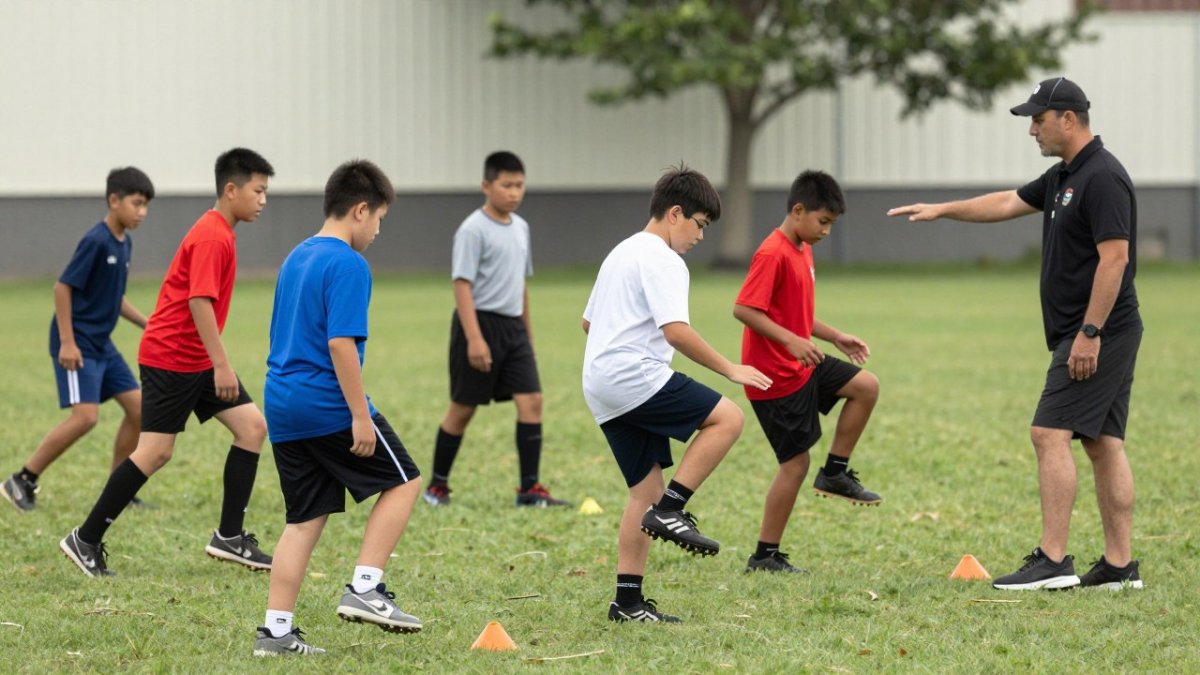
- Single-skill sessions: A 60- to 90-minute block on route running, tackling technique, or hand placement for linemen.
- Multi-week series: Four to eight sessions that build on each other, usually one evening per week.
- Position clinics: Small groups organized by position so a receiver works with receivers and a lineman works with linemen.
Group size is one variable worth checking when comparing programs. Ask for the player-to-coach ratio before you register, and ask how many reps each player gets in a session. A clinic that promises small groups but stacks twenty kids on one coach is not delivering the format you are paying for.
Age and skill fit matter here too.
Best for: Kids who want to build one specific skill without committing to a full camp week, and families who need a schedule that fits around school and other activities.
Skip if: Your child needs a full-day, multi-drill experience with a large group of peers, or is still exploring positions and has not settled on one.
Watch out: A clinic labeled “skills” can still be a general camp in disguise. Ask what percentage of the session is dedicated to the named skill and whether the same coach runs every session.
Multi-Sport and Flag Football Programs as Alternatives
Some athletes benefit from stepping away from tackle football for a season. Multi-sport programs and flag football leagues build agility, decision-making, and teamwork without the same contact load.
For a young athlete who is still learning how to move, these options build a broad athletic base.
Best for: Younger players, or athletes who want variety and a lower-contact way to keep developing.
Skip if: Your child has already committed to tackle football and wants position-specific instruction now.
Youth Football Offseason Training Programs
The offseason is when most skill gains happen, yet it is also when many players drift. A structured offseason program keeps them moving and gives them a plan between seasons.
Best for: Athletes who want continuous development and a plan for the months between seasons.
Skip if: Your child needs a break from structured football and benefits more from unstructured play.
Local Options and Practical Logistics for Crofton Families
For families in Crofton, Maryland, the best alternative depends less on the program’s reputation and more on whether it fits your week. A strong program that requires a 45-minute drive each way on a school night is hard to sustain, and a clinic that conflicts with practice or family commitments will get skipped.
Start with geography. Before you commit, map the drive at the time you would actually travel, not at midday. A route that looks short on a map can double during rush hour.
Then check these practical points:
- Schedule fit: Does the program run on evenings or weekends, and how many weeks does it last? A four-week clinic is easier to commit to than a twelve-week program.
- Facility type: Is it indoors, outdoors, or turf? Outdoor sessions in summer heat call for a heat policy and water breaks; ask how any program handles both.
- Equipment: Does your child need to bring cleats, a helmet, or a football, or does the program provide them? Equipment requirements change the true cost and the logistics.
- Supervision: Ask about coach ratios, background checks, and how injuries are handled on site.
- Travel and carpool: If the drive is long, ask whether other families carpool or whether the program offers multiple locations.
A common pattern is that families choose a program based on the coach, then discover the schedule does not work. Reverse that order: confirm the schedule and location first, then evaluate the coaching.
Our Where We Train page shows where our sessions take place, so local families can judge access before they reach out. If you are comparing several options, our guide on 7 steps to choose a football training program in Crofton walks through the same criteria side by side.
Watch out: A program that lists a local address may still hold sessions at a different facility. Confirm the actual training location before you register.
Choosing the Right Option for Your Athlete
The right choice depends on your child’s age, position, and goals. A seven-year-old learning fundamentals needs something different from a fifteen-year-old who wants college exposure.
Start with three questions. What skill does your child most need to build? How much time can your family commit each week? And does your child want general development or position-specific work? Your answers will narrow the list quickly.
A simple process can help you decide. Follow our guide on 7 steps to choose a football training program in Crofton to compare options side by side. For a deeper look at matching programs to your child, see which youth football training program is right for your child in 2026.
Ready to see how focused quarterback instruction fits your child’s goals? Apply today and start building the skills that carry into game day.
Frequently Asked Questions
Are football camps worth it for young players?
Traditional camps can be worthwhile for exposure to new coaches and drills, but they are a single block of instruction. Many families find that small-group clinics or year-round position coaching give a child more repetitions on the skills that matter most. Ask the program how many reps each athlete gets per session, what the coach-to-player ratio is, and whether instruction is tailored to position. Pricing varies widely, so check directly with each provider for current rates and schedules.
How can young football players improve their skills outside of camp?
Consistent, short sessions usually beat one intensive week. Focus on footwork ladders, catching drills, and throwing mechanics several times a week during the offseason. Film a few reps each week so the athlete can compare progress. Pair physical work with simple film study, such as watching how pro quarterbacks read a defense, to build football IQ. Specialized clinics or offseason training can supply coaching feedback that is hard to replicate at home.
What should parents look for in a youth football training program?
Start with the coaching staff’s background and whether they teach position-specific fundamentals. Ask about group sizes, since smaller groups mean more individual feedback. Look for age-appropriate drills for the child’s stage, a clear progression plan, and a focus on both technique and decision-making. Confirm the facility is safe and that coaches follow standard youth safety practices. Request a schedule and an overview of what each session covers before enrolling.
How can a quarterback practice during the offseason?
Work on footwork first, including drop steps, pocket movement, and balanced throwing platforms, then add accuracy drills at targets of varying distance. Practice reading simple coverages by walking through progressions with a teammate or coach. Limit high-volume throwing for younger athletes to protect their arms, and mix in rest days. A structured offseason plan with a coach who can correct mechanics usually produces better results than unguided repetition.