
Table of Contents
- What Is Football IQ and Why It Matters
- Step 1: Master Football Film Study Techniques
- Step 2: Learn How to Read Pass Defenses
- Step 3: Develop Football Situational Awareness Drills
- Step 4: Build Your Daily Football IQ Habits
- Step 5: Study Tactical Principles and Positioning
- Common Mistakes to Avoid When Improving Football IQ
- Frequently Asked Questions
Last Updated: September 28, 2026
What Is Football IQ and Why It Matters
Football IQ is the ability to understand the game before it happens. It’s reading defenses, anticipating plays, and making split-second decisions under pressure. Players with high football IQ don’t just react, they predict.
This skill separates elite athletes from good ones. A quarterback with strong football IQ can audible at the line. A receiver knows where the ball is going before it leaves the QB’s hands. A linebacker diagnoses the play and fills the gap.
At QB Factory, we’ve worked with hundreds of athletes to build this mental edge. The physical tools matter. But game intelligence wins championships.
Why does this matter now? College coaches aren’t just looking for athletic ability anymore. They want players who think the game. High school athletes who develop football IQ early gain a massive advantage in recruiting and on Friday nights.
Football IQ is the mental foundation that turns physical talent into consistent performance. Without it, even gifted athletes plateau.
Step 1: Master Football Film Study Techniques
Film study is where football IQ is built. Most players watch games passively. Elite players study them systematically.
Start by watching full games, not highlight reels. Highlights hide mistakes and show only the best plays. Full games teach you what defenses do on every snap, the boring plays, the failed reads, the adjustments.
Breaking Down Game Film Systematically
Watch film with a clear purpose each time. Don’t just hit play and zone out.
Pick one position or one player to focus on per session. If you’re a quarterback, study one opposing QB. If you’re a receiver, track one pass catcher. This narrows your attention and builds pattern recognition.
Watch the same game multiple times from different angles:
- First pass: Watch the play develop from start to finish
- Second pass: Focus only on your position
- Third pass: Watch the defense and how they react
- Fourth pass: Study pre-snap reads and body language
Write down what you see. Note when players line up in certain formations. Mark when defenses adjust. Document tendencies. This written record becomes your personal playbook.
Use a notebook or digital tool to track patterns. Over time, you’ll start recognizing defensive structures before the snap. That’s when your football IQ jumps.
Rewind after every play. Watch the QB’s eyes before release. Watch how receivers break their routes. Watch where safeties line up. The details compound into effective knowledge.
Identifying Patterns and Tendencies
Defenses aren’t random. They follow rules. Your job is finding those rules.
After watching 3-4 games of the same team, patterns emerge:
- Do they blitz on third-and-long?
- Do they favor zone or man coverage?
- Does the safety rotate to one side?
- Do they adjust based on personnel?
Document these tendencies. Write them down. Share them with your coaches. When you can predict what a defense will do, you’ve built real football IQ.
Look for situational tendencies too. Teams often play differently near the goal line. They adjust based on down and distance. They change schemes when trailing late in games. Notice these patterns.
The best players study opponents before facing them. They know what’s coming. That confidence translates to better decisions on the field.
Step 2: Learn How to Read Pass Defenses
Reading defenses is the core of quarterback football IQ. But receivers, running backs, and even linemen need to understand coverage too.
Pre-snap reads happen before the ball is snapped. Post-snap reads happen as the play develops. Master both.
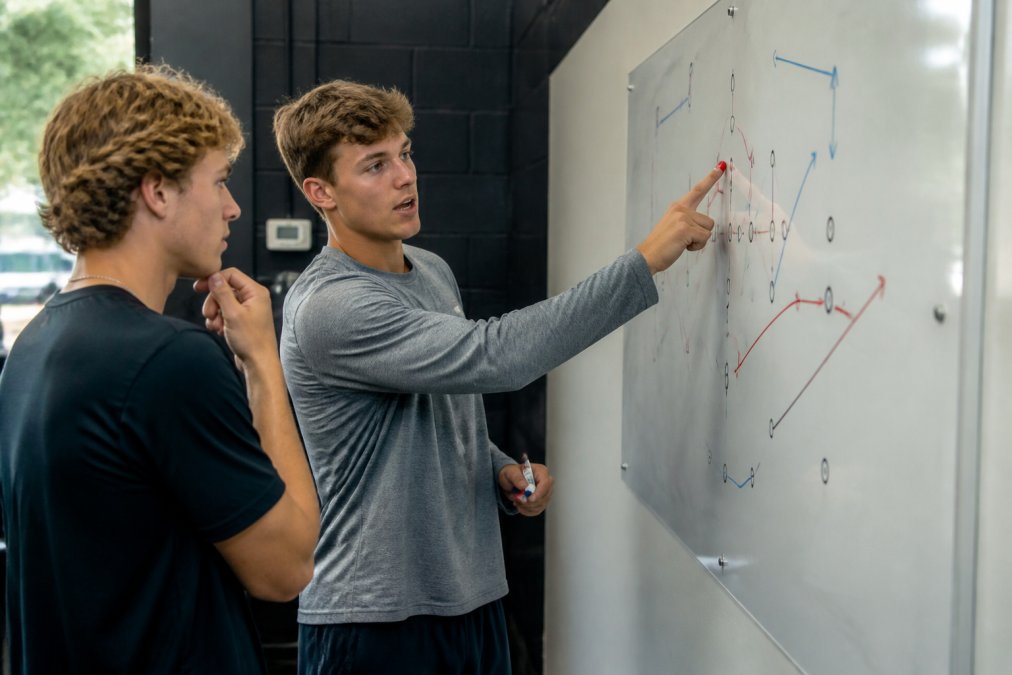
Recognizing Coverage Types Pre-Snap
Start by identifying the number of defenders in the box. Count them. This tells you if it’s a run-stopping look or a pass-coverage look.
Next, look at safety alignment. Are they high (two-high safeties) or rotated (one-high safety)? This hints at coverage type.
Study cornerback positioning. Are they pressed up on receivers or playing soft? Are they shading inside or outside?
The main coverage types you’ll see:
- Man coverage: Each defender covers one receiver
- Zone coverage: Defenders cover areas, not people
- Blitz packages: Linebackers or safeties attack the line
- Combination coverage: Mix of man and zone principles
Learn to spot these before the snap. Watch the hips and shoulders of defenders. Their body position reveals their assignment.
Adjusting to Post-Snap Movement
The snap changes everything. Defenses move. Your read must adjust.
If you’re a quarterback, your first read might be covered. Know your second and third options. This is where film study pays off, you’ve seen similar looks before.
Receivers must adjust their routes based on coverage. Against man coverage, create separation through footwork. Against zone coverage, find soft spots between defenders.
Watch how elite receivers operate. They feel the coverage as they run. They adjust without thinking. That’s football IQ in action.
Quarterback Registration (Required) →
The key: Don’t panic when your first read isn’t open. Trust your progressions. Trust what you’ve studied. Make the next decision quickly.
Step 3: Develop Football Situational Awareness Drills
Situational awareness is understanding the game state. Down and distance. Field position. Time remaining. Score. These factors change how you should play.
A third-and-2 plays differently than third-and-12. Red zone offense differs from mid-field drives. Two-minute drills demand different decisions than early-game plays.
Solo Drill Progressions for Tactical Awareness
You don’t need teammates to build tactical awareness. Solo drills work.
Drill 1: Coverage Recognition
Watch film clips with the sound off. Pause at the snap. Call out the coverage type before it develops. Write down your answer. Rewind and check if you were right. Do 10 clips per session.
Drill 2: Read Progression Execution
Stand in your position (QB, receiver, lineman). Simulate game situations mentally. Walk through your reads. Call them out loud. Practice the footwork and movement without a ball.
Drill 3: Situational Decision Making
Create scenarios. It’s third-and-6 with two minutes left, down by four. What play would you call? What read would you take? What’s your hot route? Document your decisions.
Drill 4: Defensive Alignment Recognition
Look at still photos of defensive formations. Identify the coverage. Predict where the blitz is coming from. Write down your prediction. Check it against film breakdown.
These drills build pattern recognition. Your brain learns to process information faster. Game speed becomes normal speed.
Game-Speed Decision Making
Game speed is different from practice speed. The pressure is real. The clock is running. Defenses are moving.
To simulate game speed, add time pressure to your drills. Give yourself 2-3 seconds to make a decision. That’s closer to real game conditions.
Practice with distractions. Have someone talk to you while you’re reading coverage. Have background noise. Game day is loud. Your brain needs to filter it out.
The more you train at game speed, the slower the game becomes.
Practicing slow creates slow players. Always push for game speed in your mental drills. Comfort breeds complacency.
Step 4: Build Your Daily Football IQ Habits
Football IQ compounds. Small daily habits create massive advantages over months and years.
Mental Conditioning and Pressure Management
Pressure is where football IQ matters most. When you’re anxious, your processing slows down. Your reads get muddled. Your decisions suffer.
Integrating Physical and Cognitive Training
Your body and mind are connected. Physical fatigue clouds mental clarity. A tired quarterback makes bad reads. A tired receiver runs sloppy routes.
Step 5: Study Tactical Principles and Positioning
Understanding why plays work matters as much as knowing what plays do.
Offensive and Defensive Frameworks
Offensive principles:
- Create space for ball carriers
- Attack weaknesses in the defense
- Use formations to create mismatches
- Execute routes at full speed
- Make reads quickly and decisively
Defensive principles:
- Limit offensive space
- Play assignment football
- Communicate constantly
- Adjust to formations
- Pursue ball carriers relentlessly
Study how offenses exploit defenses. Watch how defenses adjust. This back-and-forth is tactical warfare.
Off-the-Ball Movement and Spatial Awareness
Spatial awareness is knowing where everyone is without looking at them. It’s peripheral vision combined with anticipation.
Tactical principles are universal. Master them and you master football at any level. Coaches recognize players who understand the “why” behind plays.
Common Mistakes to Avoid When Improving Football IQ
Mistake 1: Watching film without purpose. Passive viewing builds nothing. Always study with a specific focus. One position. One read. One tendency. Purpose drives learning.
Frequently Asked Questions
How do I improve my football IQ as a young athlete?
Start with consistent film study of your position and opposing defenses. Watch 15-20 minutes daily, focusing on pre-snap reads and defensive alignment patterns. Combine this with solo drills that build decision-making speed under pressure. Practice recognizing coverage types and anticipating defensive movements before the snap. Mental conditioning through classroom-style preparation helps translate what you learn to game-day situations.
What role does reaction time play in football intelligence?
Reaction time directly impacts your ability to execute reads and make decisions at game speed. Football IQ isn’t just knowing what to do, it’s executing it in seconds. Cognitive training drills that compress decision-making timeframes improve your inhibition and mental flexibility, allowing you to process information faster. Athletes who combine film study with timed decision-making exercises develop pattern recognition that makes complex reads feel automatic, reducing cognitive load when the game speeds up.
How does classroom-style mental preparation impact on-field performance?
Classroom preparation bridges the gap between understanding football concepts and executing them under pressure. By studying game situations, defensive schemes, and tactical principles in a controlled setting, you build a mental framework you can access instantly during competition. This type of preparation specifically targets pressure management and situational awareness, helping you stay composed when defenses change post-snap or when the game situation demands quick adjustments. This structured mental training can help reduce hesitation and improve decision confidence.
Can I practice improving football IQ without a full team?
Yes. Solo drills for tactical awareness, film study, and mental conditioning require only you and access to game footage. Focus on scanning and spatial awareness exercises, studying defensive formations, and practicing decision-making through timed video analysis. You can also work on peripheral vision development and pattern recognition independently. However, pairing solo work with coaching feedback accelerates progress, as an expert can identify blind spots in your reads and correct tactical discipline issues before they become habits.