

Table of Contents
- Why Mental Preparation for Football Games Matters
- Pre-Game Visualization Techniques That Work
- How to Deal with Game Day Nerves
- Building Your Football Game Day Routine
- Developing Your Competition Mindset
- Mental Toughness: The Foundation of Peak Performance
- Age-Specific Mental Preparation Strategies
- Post-Game Reflection and Mental Preparation for the Next Match
- Frequently Asked Questions
Last Updated: September 20, 2026
Why Mental Preparation for Football Games Matters
Mental preparation for football games separates the athletes who perform under pressure from those who collapse when it counts. The difference isn’t talent. It’s what happens between your ears when the stadium gets loud and the moment demands everything.
What changed everything: structured mental preparation, a complete system that builds mental toughness before game day arrives.
The competition mindset is built through deliberate practice. Athletes who master mental preparation for football games gain a measurable edge: they stay focused under pressure, execute when it matters, and recover from mistakes without spiraling.
This guide walks you through mental preparation strategies that work. These aren’t theoretical concepts. They’re tools that can help athletes earn scholarships and dominate their competition.
Pre-Game Visualization Techniques That Work
Visualization rewires your brain to perform under pressure. When you mentally rehearse a play perfectly executed, your nervous system records it as real experience. The most effective visualization is specific, detailed mental rehearsal tied directly to the situations you’ll face.
Scripting Your Perfect Play
Identify the three plays that matter most in your offense: your go-to third-down play, red zone touchdown pass, and two-minute drill audible (or equivalent for your position).
Write out exactly what happens in each play:
- Your first three steps
- Where your eyes go
- The defender’s likely reaction
- Your perfect execution
- The successful outcome
Visualize this script daily: two minutes per play, five days per week. Close your eyes and see the field from your perspective, feel your feet, hear the snap count. The key is specificity, detailed visualization (“On the slant route, I take two hard steps upfield, the safety rotates over the top, I break inside at the hash mark”) rewires your nervous system.
Mental Rehearsal for High-Pressure Moments
High-pressure moments demand different preparation. Add pressure to your mental rehearsal: visualize the play while imagining 80,000 fans screaming, the defense blitzing, your team down by four with two minutes left. See yourself executing perfectly anyway. Spend one minute per week on pressure visualization. This builds psychological resilience so your mind has already been there when game day arrives.
How to Deal with Game Day Nerves
Game day nerves aren’t weakness, they’re proof your nervous system is waking up. The goal isn’t to eliminate them but to channel them into focus and intensity.
Breathing Techniques for Arousal Regulation
Your breath controls your nervous system. Reverse anxiety with box breathing: breathe in for four counts, hold for four, breathe out for four, hold for four. Repeat five times. Do this three times on game day: in the car, locker room, and before taking the field. During the game, use tactical breathing (four counts in, four counts out) during timeouts or between plays to keep arousal in check.
The best time to practice breathing techniques is during practice, not game day. Drill these breathing patterns during conditioning. When game day arrives, your nervous system already knows the pattern.
Self-Talk Strategies to Build Confidence
What you say to yourself before kickoff shapes your performance. Generic positive self-talk doesn’t work, use specific, evidence-based statements rooted in reality: “I’ve thrown this pass a thousand times in practice,” “My footwork is sharp today,” “I execute under pressure,” “One play at a time.” Write three statements that are true about you and repeat them during warm-ups and before taking the field.
Building Your Football Game Day Routine
A strong game day routine removes decision-making and frees your mind to focus on execution. The routine starts the night before and continues through warm-ups.
The Night Before: Sleep and Nutrition
Sleep consolidates learning. Get to bed one hour earlier than usual, avoid screens 30 minutes before sleep, keep your room cool and dark, and aim for eight to nine hours. Eat a normal dinner with protein, carbs, and vegetables. Morning of game day, eat a normal breakfast (oatmeal with fruit, toast with peanut butter, or eggs and toast), nothing exotic that upsets your stomach.
Game-Day Timing: Pre-Game Preparation Steps
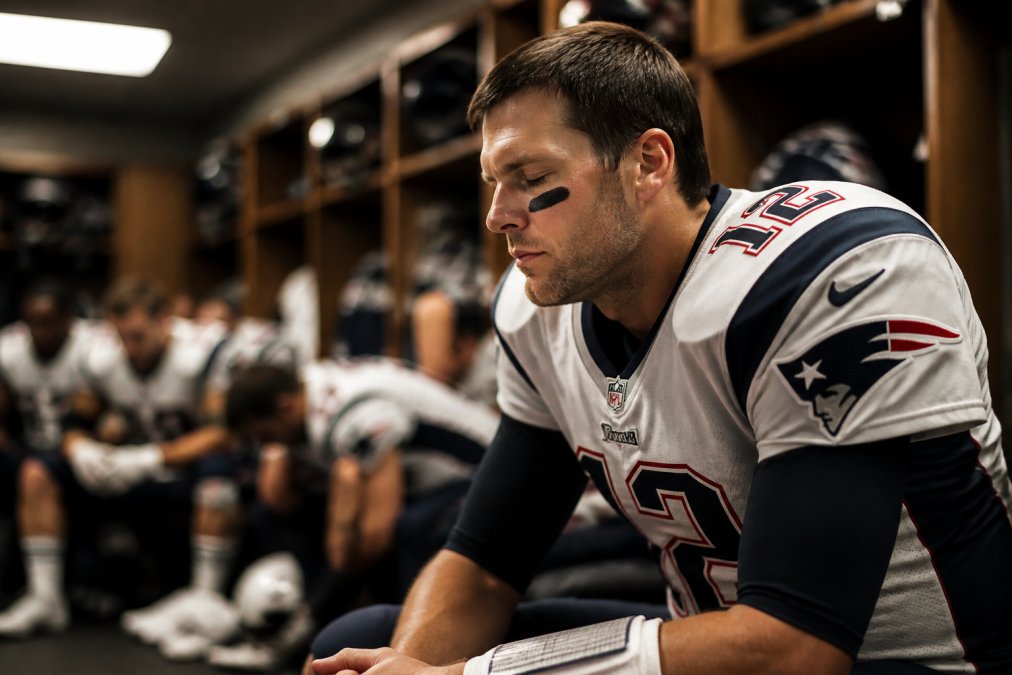
Arrive early to avoid rushing. Two hours before kickoff: stretch, review your three key plays mentally, do box breathing, eat a light snack. One hour before: put on uniform, do position-specific warm-ups, practice footwork, throw or catch 20 balls at game speed. 30 minutes before: team stretching, visualization, self-talk review, helmet on. This identical routine every game lets your nervous system settle into focus.
The best pre-game routine is the one you actually do consistently. Build it around what calms you down and gets you sharp.
Developing Your Competition Mindset
A competition mindset is the belief that you belong on the field and you’re ready to execute. It’s not arrogance. It’s earned confidence.
You build it through deliberate practice and mental training.
Goal Setting for Match Performance
Vague goals produce vague results. “Play well” doesn’t work. “Execute my assignments” doesn’t work.
Set specific, measurable goals for each game:
- Complete 70% of passes (for a QB)
- Catch 8 of 10 targets (for a receiver)
- Win your use on 90% of snaps (for a lineman)
- Zero missed assignments
- One forced turnover on defense
These goals are within your control. They’re tied to your role. They’re measurable. You’ll know at the end of the game whether you hit them.
Review your goals 30 minutes before kickoff. Visualize hitting each one. This focuses your mental preparation for football games on what matters.
Quarterback Registration (Required) →
In-Game Mental Reset Protocols
You’ll make mistakes in the game. A bad throw. A dropped pass. A missed block. What matters is what happens next.
The best athletes have a reset protocol. Here’s what works:
After a mistake:
- Take one deep breath
- Say your reset word (“Next,” “Go,” “Now”)
- Move your body (shake your arms, reset your stance)
- Focus on the next play only
This takes five seconds. It prevents one mistake from becoming two. It keeps your mind in the present moment instead of dwelling on what went wrong.
Practice this reset protocol during practice.
Mental Toughness: The Foundation of Peak Performance
Mental toughness isn’t about being tough. It’s about being resilient. It’s the ability to stay focused, execute your job, and bounce back from adversity.
Psychological Resilience Under Pressure
Pressure reveals character. When the game is tight and everything is on the line, your mental preparation for football games either holds up or it doesn’t.
Build resilience by practicing under pressure:
- Run your plays with a defender in your face
- Practice your routes at full speed against live coverage
- Do mental rehearsal while someone yells at you
- Simulate game situations in practice
Emotional Control During Competition
Emotions are data. Anger means something mattered to you. Frustration means you care about your performance. Fear means you respect the challenge.
Age-Specific Mental Preparation Strategies
Mental preparation looks different depending on age and experience level. A 10-year-old needs different mental training than a high school senior.
Youth Athletes (Ages 7-14): Building Fundamentals
Young athletes are still learning to focus. Their attention span is shorter. Their nervous systems are developing.
For youth athletes, mental preparation for football games should focus on:
- Fun and engagement
- Building basic focus skills
- Positive reinforcement
- Simple visualization (30 seconds, not five minutes)
- Basic self-talk (“I can do this”)
High School and Elite Players: Advanced Mental Skills
High school athletes can handle more complex mental training. Their brains are more developed. Their attention spans are longer. They understand cause and effect.
For high school and elite players, mental preparation for football games should include:
- Detailed visualization (five minutes per day)
- Advanced breathing and arousal regulation
- Specific self-talk tied to your role
- Goal setting with measurable metrics
- In-game mental reset protocols
- Pressure rehearsal and stress inoculation
The biggest mistake high school athletes make is skipping mental training when they’re tired or busy. Mental preparation is like physical training. You can’t skip it and expect results. Commit to five minutes daily, minimum.
Post-Game Reflection and Mental Preparation for the Next Match
What you do after the game shapes your next performance. Post-game reflection isn’t about dwelling on mistakes. It’s about learning and moving forward.
Within 24 hours of the game, review your performance:
- Did you hit your goals?
- What went well?
- What needs work?
- What will you adjust next week?
Frequently Asked Questions
What are the 4 C’s of mental toughness in football?
The 4 C’s, Commitment, Concentration, Control, and Confidence, form the foundation of mental toughness. Commitment means dedicating yourself to your goals and your team. Concentration is maintaining focus on the task at hand, not distractions. Control involves managing your emotions and responses during high-pressure moments. Confidence comes from preparation and trusting your training. Developing all four creates psychological resilience that separates elite players from the rest.
How do you overcome pre-game anxiety in football?
Pre-game anxiety stems from uncertainty and lack of preparation. Combat it through breathing techniques to regulate arousal, mental rehearsal of key plays, and a consistent pre-game routine. Reframe nerves as excitement, your body is preparing for peak performance. Positive self-talk and focusing on what you can control (effort, attitude, execution) rather than outcomes reduces performance anxiety significantly.
How can young athletes build mental resilience for competitive football?
Young athletes build resilience by practicing visualization, setting achievable goals, and learning from mistakes without self-criticism. Establish a consistent pre-game routine early so mental preparation becomes automatic. Teach breathing and self-talk techniques for managing stress. Emphasize that nerves and pressure are normal, champions feel them too. Gradual exposure to competitive situations and post-game reflection strengthen mental clarity and confidence over time.
What is the best way to visualize success before a football game?
Effective visualization involves all five senses: see the field, hear crowd noise and calls, feel the ball in your hands, smell the grass. Script specific plays or scenarios you’ll face, not just generic success. Visualize yourself executing under pressure, this mental rehearsal builds neural pathways identical to physical practice. Combine it with breathing techniques for maximum impact on game-ready mental clarity.