
Last Updated: November 1, 2026
Quick Summary
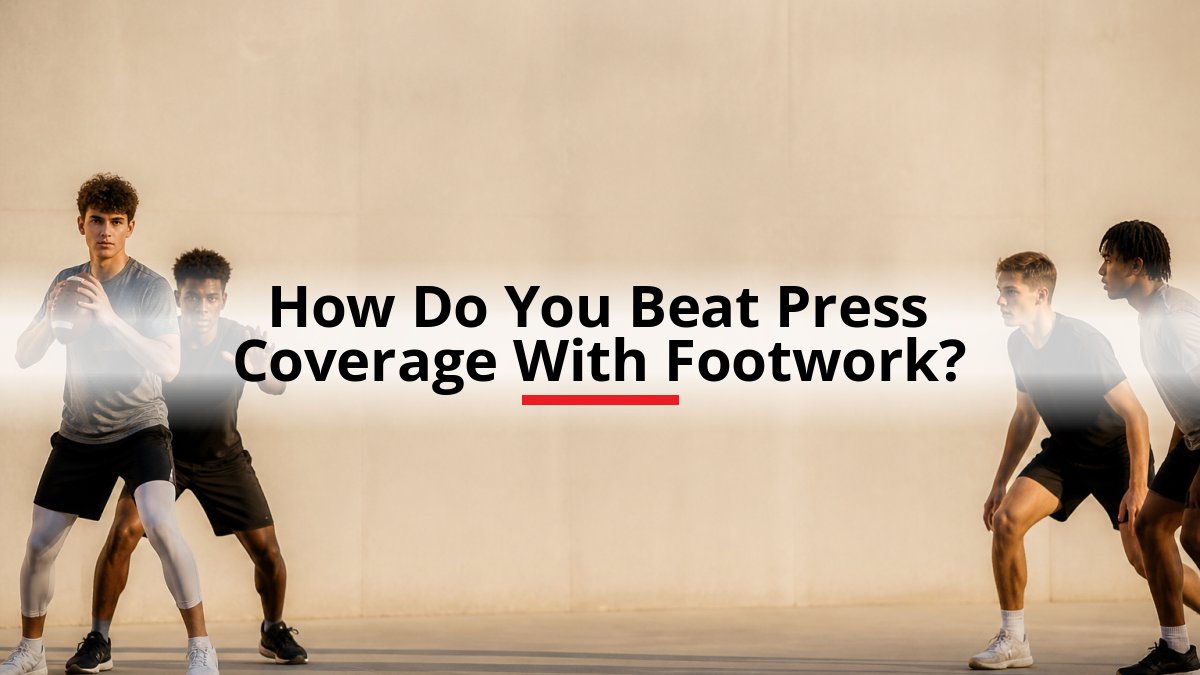
You beat press coverage with footwork by firing a short, explosive first step on the cadence, staying low with weight on the balls of your feet, and syncing your hands to your feet so the foot fires before the hand. Use a kick step to widen the defender’s base and a power step to get vertical.
- Line up with a step of cushion so the corner cannot jam you into the sideline.
- Fire your first step on the snap count, not after it, and keep it short and explosive.
- On the jam, the foot fires first and the inside hand punches to clear the defender’s grip.
- Film every phase and repeat a week if you miss its benchmark before moving to live reps.
- Against a bull rush, anchor low, punch early with both hands, and keep hips under shoulders.
Table of Contents
- Step 1: Set Your Stance and Alignment to Beat Press Coverage
- Step 2: Master the Kick Step and Power Step Fundamentals
- Step 3: Execute Pass-Set Timing and First-Step Quickness
- Step 4: Apply Press Coverage Release Techniques at the Line
- Step 5: Learn How to Beat a Jam at the Line With Hand and Foot Sync
- Step 6: Build a Progressive Plan With Wide Receiver Release Drills
- Step 7: Diagnose Footwork Errors and Adjust to Different Rush Threats
- Train Your Release Footwork With QB Factory
- Frequently Asked Questions
Step 1: Set Your Stance and Alignment to Beat Press Coverage
Beating press coverage starts before the snap. If your stance is too high or your alignment is too tight, the cornerback wins the rep before you move. Learning how to beat press coverage with footwork begins with a stance that gives you room to release.
Here is what a press-beating stance looks like:
- Weight on the balls of your feet. Flat feet kill your first step.
- Knees bent, hips low. A low hip position lets you explode out of the stance.
- Eyes on the defender’s hands and chest. Watch the hands, not the feet.
A common mistake is lining up too close to the defender. That gives the corner a shorter path to your chest. Give yourself a step of cushion, then attack.
Step 2: Master the Kick Step and Power Step Fundamentals
Two steps decide most press reps: the kick step and the power step. Get these fundamentals right and the rest of your release footwork falls into place.
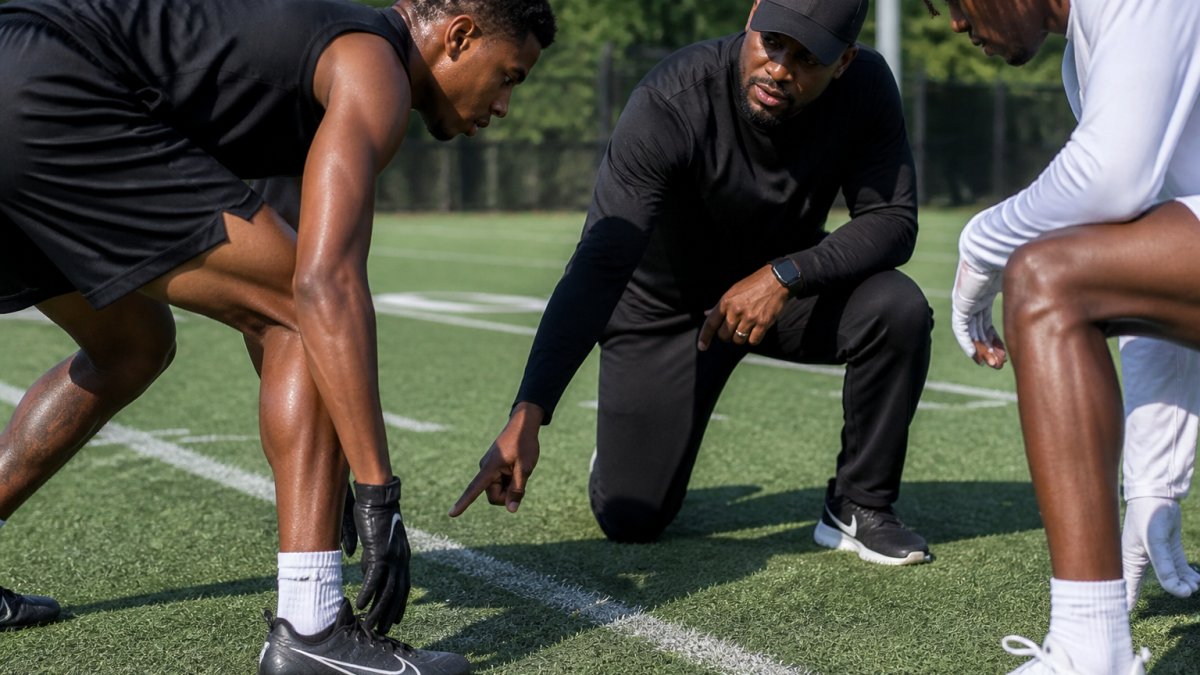
The kick step is a quick, lateral push off the inside foot. It creates separation and keeps your base wide.
The power step is a strong, vertical drive that gets you upfield. It is the step that turns a clean release into a route.
Key technique points for both steps:
- Stay low through the step. Do not pop upright.
- Keep your shoulders square to the rusher.
- Land on the ball of your foot, not your heel.
The kick and power steps are the base of every press coverage release technique. Drill them slowly first, then add speed.
Step 3: Execute Pass-Set Timing and First-Step Quickness
Timing beats speed. A receiver who moves on the first sound wins more reps than a faster receiver who waits.
Your first step should fire on the cadence, not after it. If you are late by half a step, the corner gets his hands on you. Here is how to sharpen your pass-set timing:
- Watch the ball, not the corner.
- Fire your first step on the snap count.
- Keep the step short and explosive.
- Do not reach. Let the step create the space.
A common mistake is overstriding on the first step. A long step throws off your balance and lets the defender control you. Short, quick, and low wins.
Step 4: Apply Press Coverage Release Techniques at the Line
There is more than one way to release against press. The right technique depends on the defender’s use and your route.
The main press coverage release techniques:
- Speed release: Attack the outside shoulder and get vertical fast.
- Inside release: Cross the defender’s face when he overplays outside.
- Swim release: Use an arm-over move when the corner crowds you.
The key is to stay in front of the defender’s momentum. For deeper advanced wide receiver route running techniques to apply in live reps, review this guide. Do not let him get his hands on your frame. Move your feet, keep your base, and avoid grabbing.
Step 5: Learn How to Beat a Jam at the Line With Hand and Foot Sync
Learning how to beat a jam at the line comes down to timing your hands with your feet. If your hands fire before your feet move, you get stuck.
Here is the sync:
Quarterback Registration (Required) →
- Foot first, then hand. The step creates the angle; the hand clears the jam.
- Punch with the inside hand. It breaks the defender’s grip and protects your chest.
- Swipe with the outside hand. It clears the corner’s reach.
Watch out: reaching for the defender’s hands is the fastest way to lose a rep. Reaching pulls you off balance and gives the corner control. Keep your hands close and strike, do not chase.
Step 6: Build a Progressive Plan With Wide Receiver Release Drills
A random mix of drills will not fix your release. Build a plan that starts simple, adds pressure, and gives you a way to measure whether it is working. The best wide receiver release drills are progressive: each phase builds on the last, and you do not advance until you hit a simple benchmark. For a full receiver drill progression to structure your release work, see this youth football receiver drill progression.
A progressive weekly plan for wide receiver release drills:
| Phase | Drill | Focus | Frequency | Progression Benchmark |
|---|---|---|---|---|
| Week 1 | Stance and first-step reps | Alignment, get-off | 3x per week, 10 reps | 8 of 10 reps with first step on cadence and weight on balls of feet |
| Week 2 | One-step kick set | Kick step timing and base width | 3x per week, 3 sets of 8 | 8 of 10 reps landing on the ball of the foot with a base at least shoulder-width |
| Week 3 | Mirror drill | Reaction and balance | 3x per week, 3 sets of 20 seconds | Stay square and in front of the defender for the full set without crossing feet |
| Week 4 | Hand and foot sync | Beating the jam | 4x per week, 3 sets of 6 | Foot fires before hand on 8 of 10 reps; no reaching |
| Week 5 | Full press reps | Live release vs. defender | 2x per week, 10 reps | Win 6 of 10 reps without losing balance or opening hips early |
How to run each session:
- Warm up with 5 minutes of dynamic movement, high knees, lateral shuffles, and ankle mobility, before any release work.
- Rest 45-60 seconds between sets so each rep is explosive, not fatigued.
- Film every phase from the side and from the defender’s perspective. Track one thing per phase: did you stay square and in front of the defender?
Position-specific variations:
- Outside receivers (X and Z): Prioritize the kick step and speed release. Your alignment is wider, so the corner has more room to jam, give yourself a step of cushion and attack the outside shoulder.
- Slot receivers: Prioritize the inside release and hand-and-foot sync. The slot often faces a pressed nickel or safety, so crossing the defender’s face and protecting your chest with the inside hand matter more than a wide kick step.
- Tight ends and H-backs: Prioritize the power step and anchor. You will see more bull rushes and inside counters, so keep your base wide and punch early.
Step 7: Diagnose Footwork Errors and Adjust to Different Rush Threats
Most receivers repeat the same footwork error without knowing it. Film study is how you find it.
Common errors, cues, and fixes:
- Reaching: You lunge at the defender with your hands before your feet move. Cue: your shoulders dip forward and your first step is long. Fix it by shortening your first step and firing your hands only after the foot lands. Drill: one-step kick sets with a partner holding a pad, focusing on foot-first contact.
- Crossing your feet: You lose balance and open your hips. Cue: your feet come together or cross during the release. Fix it with lateral footwork and mirror drills that keep your base wide. Drill: lateral shuffle mirror drill, 3 sets of 20 seconds, staying square to a moving partner.
- Standing tall: You pop upright out of the stance and lose power. Cue: your helmet rises before your feet move. Fix it by staying low through the release and keeping your hips below the defender’s hands. Drill: stance-and-get-off reps with a coach holding a hand at helmet height to force you to stay low.
Adjusting to different rush threats:
Different rushers need different answers. Do not teach one generic movement.
- Speed rush: The defender tries to run around you. Stay square, do not overcommit, and use a short kick step to mirror his path. If he gets even with your outside shoulder, punch with the inside hand to redirect him.
- Inside counter: The defender shows speed, then cuts back inside. Keep your base wide and mirror the cut with a lateral step, do not cross your feet. Your inside hand should be ready to protect your chest.
- Bull rush: The defender tries to drive you back into the quarterback. Anchor low, punch early with both hands, and keep your hips under your shoulders. Do not give ground by standing tall.
- Changing rush angles: The defender starts wide and loops inside, or starts tight and works outside. Keep your eyes on his inside hand and adjust your set depth, shorter set against speed, deeper set against power.
The real difference between good and great receivers is how fast they adjust. Study the film, name the error, drill the fix, and practice against each rush threat until the adjustment is automatic.
Train Your Release Footwork With QB Factory
Beating press coverage is a skill, and skills are built with reps and coaching.
QB Factory trains quarterbacks, receivers, and linemen with a progressive formula that pairs physical mechanics with classroom-style mental prep. Our staff includes former D1 players and championship-level coaches.
Our programs give you individualized drills for footwork and reaction to pass defenses, with classroom-style preparation for high-pressure game situations. See what’s included in the wide receiver programs before committing.
Get started with QB Factory and build the release footwork that wins reps at the line. Find out where the wide receiver programs are located so you can book. Apply today!
Frequently Asked Questions
How do you beat press coverage as a wide receiver?
Beat press coverage by combining a quick first step with active hands. Start in a balanced stance with your inside foot back, then use a kick step to create lateral space while your inside hand swipes the cornerback’s punch. Keep your shoulders square and your base wide so you can react to a speed rush or inside counter. Practice press coverage release techniques daily, and pair them with wide receiver release drills that simulate a jam at the line. The goal is to stay in front of the defender and control the timing of your release.
What footwork helps a receiver beat press coverage?
The kick step and power step are the core footwork tools. The kick step gains ground laterally and opens your hips to the sideline, while the power step drives vertically through the cornerback’s outside shoulder. Use a one-step kick set to get to your set point quickly, then mirror the defender’s feet with short, choppy steps. Keep your base wide and your weight balanced over your hips. Avoid reaching or grabbing, which slows your release and lets the cornerback recover. Film study helps you match the right step to each rush angle.
How can a receiver avoid getting jammed at the line?
Avoid the jam by attacking the cornerback’s hands before they reach your chest. Use a quick outside hand swipe or a swim move to knock the punch away, and keep your feet moving so you do not stall at the line. Change your release angle with a split release or a hesitation move to keep the defender guessing. Stay low and keep your hips under your shoulders to absorb contact. Practice how to beat a jam at the line with a partner or a mirror drill, and review film to spot when you are late with your hands.
How do you practice releases against press coverage?
Set up a mirror drill with a partner acting as the cornerback. Focus on your first step, hand placement, and staying square. Run one-step kick sets to a set point, then add a power step to simulate a vertical release. Use a reaction drill where the defender flashes a speed rush or inside counter and you adjust your footwork. Track your first-step quickness and balance on film. A progressive plan with measurable benchmarks, such as completing 10 clean releases in a row, keeps practice focused and builds game-day confidence.