
Table of Contents
- What Football Leadership Skills Actually Mean for Players
- Develop Football Communication Skills That Build Trust
- How to Be a Team Captain in Football
- Leadership Drills for Football Players You Can Start Today
- Build Accountability and Responsibility in Your Locker Room
- Leadership for Different Positions and Experience Levels
- Measure Your Leadership Growth
- Frequently Asked Questions
Last Updated: October 5, 2026
What Football Leadership Skills Actually Mean for Players
Football leadership skills are the abilities that help players influence, guide, and elevate their teammates on and off the field. At QB Factory, we define leadership not as a title or position, but as the capacity to communicate clearly, make sound decisions under pressure, and inspire others through consistent action and accountability.
Leadership in football goes beyond the quarterback or captain. Every player, whether you’re a lineman, receiver, or defensive back, can develop these skills. The best teams have leaders at every level.
Here’s what separates good leaders from great ones: they don’t wait for permission. They lead through example first, earn trust through consistent behavior, and then use their voice to motivate others.
The foundation of football leadership skills rests on three pillars:
- Communication that cuts through noise and creates clarity
- Accountability that holds yourself and teammates to a standard
- Resilience that keeps the team moving forward when things get difficult
These aren’t soft skills. They directly impact performance.
Develop Football Communication Skills That Build Trust
Clear communication is the heartbeat of any high-performing team. Without it, plays break down, frustration builds, and accountability disappears.
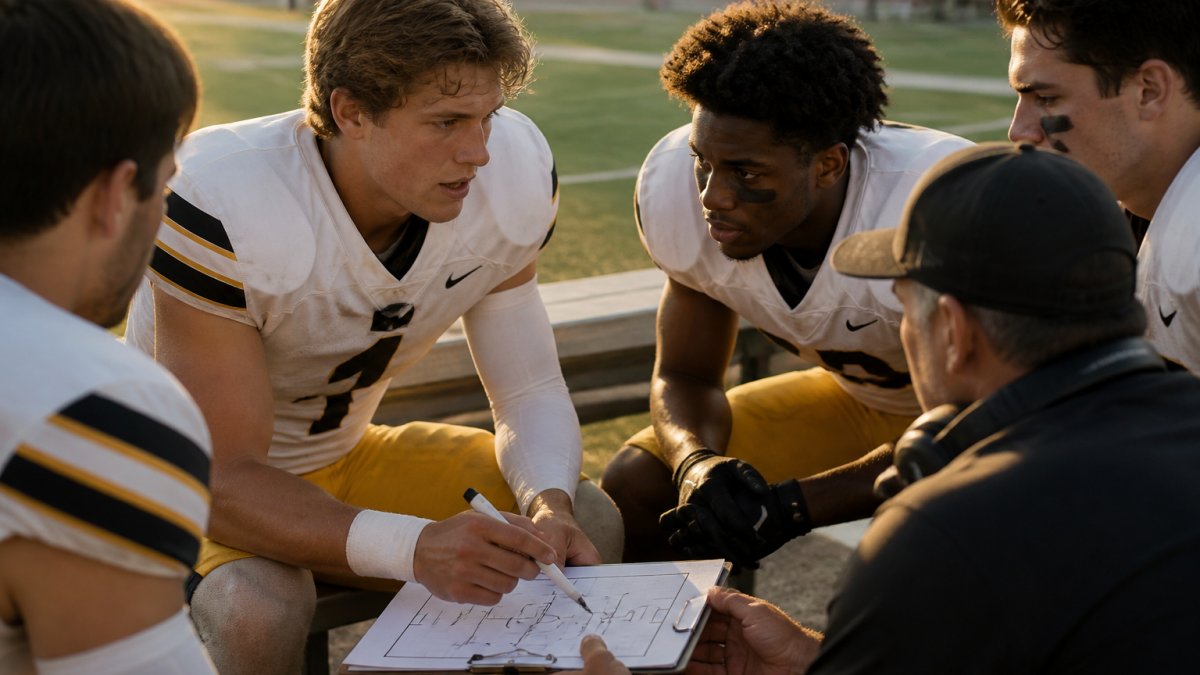
Most players think communication means shouting louder or talking more. That’s wrong. Real communication means your teammates understand exactly what you’re saying and why you’re saying it, even in chaos.
Active Listening on the Field
Active listening is the first step to being heard. If you don’t listen to your teammates, they won’t listen to you.
When a teammate speaks to you before a play, during a timeout, or in the locker room, listen without planning your response. Hear what they’re actually saying, not what you expect them to say. Ask clarifying questions.
This builds trust faster than almost anything else. Teammates know you care about their input.
In practice, this means:
- Face the person speaking to you
- Repeat back what you heard to confirm understanding
- Ask one follow-up question before responding
- Avoid interrupting or finishing their sentences
Clear, Direct Communication Under Pressure
When the game is on the line, vague communication costs you. Your message must land immediately.
Use short sentences. Use specific words. Say what needs to happen, not what might happen.
BAD: “Hey, maybe we should try to execute better on this next drive.”
GOOD: “We’re running power right. Block down. Finish blocks.”
Direct communication under pressure does three things:
- Removes confusion about what’s expected
- Shows confidence in your teammates
- Creates a shared sense of purpose
Practice this in drills. When you’re tired and stressed, that’s when your communication matters most.
The best communicators repeat the same message in different ways. If one explanation doesn’t land, try another angle. Don’t assume people understand just because you said it once.
How to Be a Team Captain in Football
Being a captain means you’ve earned the right to lead. It’s not a popularity contest. It’s a responsibility to your team’s success.
Real captains don’t get the job because they’re the best athlete. They get it because they make everyone around them better. They hold people accountable, including themselves. They show up first and leave last.
Lead by Example Before You Lead by Voice
Your actions speak louder than your words. Always.
If you want your teammates to give maximum effort in practice, you give maximum effort every single rep. If you want them to study film, they see you studying film.
This is non-negotiable. You cannot ask someone to do something you won’t do yourself.
Leading by example means:
- Showing up early, staying late
- Executing the fundamentals perfectly, every time
- Treating practice like it’s game day
- Responding to mistakes with immediate correction, not excuses
- Demonstrating the standard you expect from others
After you’ve established this pattern, your voice carries weight. Now when you speak up, people listen because they’ve already seen you live what you’re saying.
Earning Respect Across Positions
Respect isn’t automatic. It’s earned through consistency and fairness.
You earn respect by treating every position and every player the same. The star receiver gets the same accountability message as the third-string lineman.
Respect also comes from knowing your teammates’ strengths and helping them succeed in their role. A good leader doesn’t try to make everyone like them.
When you correct a teammate, do it privately. When you praise them, do it publicly.
The biggest mistake new leaders make is trying to be everyone’s friend. You can’t be a leader and a friend at the same time. Choose leadership. Real friendships come after the season ends.
Leadership Drills for Football Players You Can Start Today
Leadership isn’t developed in a classroom. It’s developed through deliberate practice.
Here are three drills you can start using immediately. Each one builds a specific leadership skill under realistic game conditions.
Drill 1: Pre-Game Team Huddle Leadership
This drill teaches you to communicate clearly when your team needs direction most.
Setup: Gather your offense or defense 10 minutes before practice. You lead a 2-minute team huddle.
Execution:
- State the focus for the day in one sentence
- Give one specific example of what success looks like
- Ask one teammate to share their commitment
- End with a clear call to action
Measurement: Did every player understand the message? Did they repeat it back correctly? Did the energy shift?
Run this drill daily. Rotate who leads the huddle so everyone develops this skill.
Drill 2: One-on-One Accountability Conversations
This drill teaches you to have difficult conversations without creating conflict.
Setup: After practice, pull one teammate aside privately. Give them feedback on one specific action they did or didn’t do.
Execution:
- Describe the specific moment or action
- Explain why it matters to the team
- Ask them what they’ll do differently next time
- Commit to checking back in one week
Measurement: Did they understand why you brought it up? Did they take it as helpful, not personal? Did they improve the next time?
Quarterback Registration (Required) →
Rotate through your entire team over four weeks. This builds accountability culture.
Drill 3: Decision-Making Under Pressure Scenarios
This drill teaches you to make sound decisions when the game is tight.
Setup: In practice, create game-situation scenarios where you have 10 seconds to make a decision and communicate it.
Examples:
- Down 4, two minutes left. What’s the play call?
- Receiver is injured. Who moves into that role?
- Opponent is blitzing every snap. How do we adjust?
Execution:
- Process the situation quickly
- Make a clear decision
- Communicate it to your team in 15 seconds
- Execute it
Measurement: Did you stay calm? Did your team execute what you decided? Did it work?
Do this drill twice a week. Pressure is a teacher. Get comfortable with it in practice so you’re comfortable with it in games.
| Drill | Focus | Frequency | Duration |
|---|---|---|---|
| Team Huddle Leadership | Communication and clarity | Daily | 2 minutes |
| One-on-One Accountability | Difficult conversations | 2x per week | 3-5 minutes per player |
| Decision-Making Under Pressure | Composure and sound judgment | 2x per week | 10 minutes |
The three leadership drills work because they’re specific, repeatable, and tied directly to game situations. You’re not building abstract leadership, you’re building the exact skills you’ll need on Friday night.
Build Accountability and Responsibility in Your Locker Room
Accountability is what separates teams that talk about winning from teams that actually win.
Accountability means everyone knows the standard. Everyone knows what happens when you meet it.
This starts with you. If you’re a leader, you hold yourself to the highest standard first.
Your teammates watch this. They see that accountability applies to everyone, including the leader.
Building accountability means:
- Setting clear, written standards for the team
- Reviewing those standards weekly
- Correcting mistakes immediately, not letting them slide
- Celebrating when standards are met
- Treating accountability as a team strength, not a punishment
The best teams have a culture where players correct each other without waiting for a coach.
Leadership for Different Positions and Experience Levels
Leadership looks different depending on where you play and how long you’ve been playing.
Quarterback Leadership Versus Lineman Leadership
A quarterback leads primarily through communication and decision-making. They see the entire field. They call plays. They adjust pre-snap. Their leadership is visible.
A lineman leads primarily through effort, consistency, and example. They don’t have the ball. They don’t call plays.
Both are essential. Both require different skills.
Quarterbacks must develop:
- Pre-snap communication with receivers and linemen
- Post-play communication that keeps the team focused
- Decision-making under pressure
- Composure in high-stress moments
Linemen must develop:
- Relentless effort on every single snap
- Consistency in technique and assignment
- Physical and verbal leadership in the trenches
- Accountability for gaps and assignments
The best football teams have strong leaders at both positions. The quarterback can’t win alone. The lineman can’t win alone. Together, they create a culture where everyone leads.
Young Players and Developing Leadership Early
If you’re a young player, you might think leadership isn’t for you yet. That’s the wrong mindset.
Leadership development starts now, not when you’re a senior. The earlier you start, the more natural it becomes.
Young players can lead through:
- Asking questions and showing genuine curiosity
- Helping teammates who are struggling
- Showing up prepared and ready to work
- Treating every rep like it matters
- Respecting the veterans and learning from them
As you get older, your leadership grows. But it only grows if you’ve been practicing it all along.
At QB Factory, we see this pattern repeatedly. If you’re serious about developing these skills, Apply today! to connect with resources and mentorship that can accelerate your leadership growth.
Measure Your Leadership Growth
You can’t improve what you don’t measure.
Most players track stats: catches, tackles, yards. Few track leadership metrics. That’s a mistake.
Here’s how to measure your leadership growth over a season:
Communication clarity: Did your teammates understand your messages? Ask them. Get specific feedback.
Accountability consistency: How many times did you address a mistake or standard violation?
Teammate feedback: Ask three teammates to rate your leadership on a scale of 1-10.
Your own mistakes: How quickly do you admit them?
Create a simple tracking sheet. Update it weekly.
Developing football leadership skills isn’t optional if you want to compete at the highest level.
Frequently Asked Questions
What are the most important football leadership skills for players?
The core leadership skills in football are communication, accountability, composure under pressure, and leading by example. Communication means actively listening and speaking clearly in the locker room and on the field. Accountability means owning mistakes and holding teammates to high standards. Composure keeps you focused during high-pressure moments. Leading by example means showing up to practice early, working hard, and displaying integrity both on and off the field. These five qualities form the foundation that separates good players from true leaders.
How can football players show leadership without being team captain?
You don’t need a captain’s title to lead. Show leadership by mentoring younger players, encouraging teammates after mistakes, and holding yourself to the highest standard in practice and games. Speak up in the locker room when it matters, take responsibility for your own performance, and build trust through consistent, reliable effort. Position-specific leaders emerge naturally: a linebacker can lead the defense, a receiver can set the tone for the offense. Focus on influence and respect rather than authority, and leadership will follow.
What does good communication look like on a football team?
Good communication is direct, timely, and respectful. On the field, it means calling out assignments, adjusting to defensive looks, and keeping teammates informed without blame or frustration. In the locker room, it means listening more than you talk, asking clarifying questions, and addressing issues privately before they become team problems. Avoid vague language, say exactly what you mean. Communicate with purpose, not just noise. Strong communicators earn trust because their teammates know they’ll get straight answers and honest feedback.
How can I measure whether my football leadership skills are improving?
Track three measurable indicators: team performance (wins, fewer penalties, improved discipline), teammate feedback (ask your coach or peers if they see you as more reliable and trustworthy), and your own consistency (showing up prepared, staying composed in pressure situations, following through on commitments). Ask your coach for specific feedback on your leadership impact quarterly. Notice whether younger players are starting to follow your example and whether your teammates are more responsive to your communication. Real leadership growth shows up in how your team performs and how your teammates respond to you.